India : Welcome remarks from tribal in India

Tuesday, January 17, 2012

By Anthea Gerrie


Bishnoi tribe in Rajasthan wear colorful clothes, living a colorful as well.


The Bishnoi villagers in the west of Rajasthan have a unique way of welcoming guests. For the sake of decency, they will let you taste the opium.

You will be more reluctant resist after seeing the elaborate rituals performed by this isolated community to make the dough opium.

When I came there, destroy the host of small balls dry opium in a copper bowl. Slowly, she added water, drop by drop. After filtering it several times, the batter called "charity" is then poured into my hands that have been looked up.

Not as I imagined, it's liquid, bitter and have no bearing on anything.

Even so, what they do is a form of extraordinary hospitality.

Opium and preservation


The ritual of making beverages opium prepared for the guests home.

The ritual of making the opium drink is made for visitors who come to the village. Although officially banned opium in India, but is still available thanks to the environmentalists is tribe. From this brave tribe Bishoi, the term "Tree-Hugger" (followers of the tree) is derived.

In 1730, hundreds of people from the Bishnoi tribe was ready to sacrifice
their lives by hugging trees to prevent logging. These people were later beheaded. But when the Maharaja of Jodhpur to hear stories of sacrifice Bishnoi tribe, he ordered the loggers to cut trees (and heads) in the region.

To this day, the Bishnoi is famous for its dedication to saving the environment. Governmental authority even pretend not to know the use of opium Bishnoi tribe for religious rituals.

In the course of 40 km to the southeast of Jodhpur it, my guide explained how the Bishnoi tribe-laws enjoy drinking tea together. On the day of the wedding, the bride's father offers opium mixed water into the groom's father. Offered three times, three times as well as the opium of water is drunk from the hand. Furthermore, the groom's father would do the same for the father of the bride.

Actually this is an introductory ritual when a stranger came to visit. However, they respect the manners and customs of foreigners who visit by allowing opium to drink water from the hands of the tourists themselves.

Sometimes powdered saffron (Kuma-Kuma) is used as a substitute for opium.

Rooted in religion


In addition to opium water, those who visit the village will also be treated to traditional dishes, the bread and curry.

The word "Bishnoi" which means 29 - refers to the 20 principles of Hindu and Muslim principles are upheld nine
These ethnic groups - which in essence produces a series of orders relating to environmental protection.

The Bishnoi have great respect for the deer and cows because they believe these two creatures were their ancestors. Thus, deer and cows they were protected from hunters. The women here are even ready to give milk to a motherless deer. The Bishnoi also never eat meat.

Wood that they would use for cooking will be thrown to the ground three times, just to ensure no more insects are hidden in the wood when burned.

They also filter the water twice before cooking,
to avoid the presence of small insects.

But the most striking feature of the life of Bishnoi tribe (now no longer valid) is a system of males.

While enjoying the post-opium dish - curry squash, peppers and wheat chapatis - I was told that until 50 years ago, most handsome man in the village would be well advised to sleep with as many unmarried women, for ten years.

Males were then beheaded, or at least, ostracized for life. This system has now been banned - even though they also say the same thing about opium here.

This system has now been banned - even though they also say the same thing about opium here.

Reach Jodhpur

Jodhpur can be reached from Delhi by flight for one hour or 10 hour night train. Sajjan Singh, Surya Kunj innkeeper (www.mahindrahomestays.com), can arrange your visit to the Bishnoi community.


source : www.yahoo.com

India: Cheap Travel Delhi in Paharganj

Monday, January 16, 2012

By: Olenka Priyadarsani


Jakarta has Jalan Jaksa, Geylang Singapore has, in Bangkok's Khao San Road aka KSR, and Ho Chi Minh Pham Ngu Lao have. These places are the favorite locations of the tourists with limited funds. In New Delhi, Paharganj is a favorite of backpackers. The location is very strategic, not far from the area of ​​Old Delhi (Old Town) and very close to the railway station and metro. It was the right choice for you who want behemat, is not it?

Paharganj, the backpacker area like other countries, situated not far from the center of town. Usually this is the same region of the main road along the ranks of some of the aisles contain smaller inexpensive hotels, restaurants, grocery stores, and vendors on the roadside. When first entering the Paharganj area, my first impression was this place more dirty, more slums, and more chaotic than the backpacker area in other countries I have ever visited.


However, many people also argue that the Paharganj is a great place to get to know India better. Here you can witness the daily life of people with more closely, especially those from the lower classes. In addition, not too many options if indeed you have limited funds. Although the cost of living in India for wisatan are cheap, including the high hotel rates. This happens because the Indian government to limit the number of hotels are increasing rapidly. So in addition to Connaught Place and Karol Bagh - which is not too far from Paharganj with fewer accommodation options - there is no other option for limited pocket.

With the cheap flights to India, more and more people in Indonesia who are interested to travel to the country Shahrukh Khan. I will share my experience after a few days exploring this area of ​​Paharganj.

Accommodation

At first glance, you might feel a little horrified on arrival in the region. Old buildings are dirty and not maintained dominate this area. Many of the buildings are still operating as a hotel, shops, and restaurants. When you have reserved a hotel through the internet, you will certainly wish the hotel had been booked better than hotels as you pass through here. Do not worry, there are some places that I can recommend accommodation.

Cottage Yes Please is one of the most recommended accommodations. In addition to its location very close to the metro station, pegged rate is quite low at about 100 thousand dollars. It provides a dormitory cottages (one room with several beds), ideal for those who go in groups or who do not mind a room with strangers. The place is quite clean and well suited to meet other tourists.


Le Roi Hotel could be an option for those of you who give priority to privacy. Although from the outside does not look impressive, the interior was very clean with new furniture. The hotel is set fares starting 300 thousand dollars, the price will be more expensive if to coincide with the holiday season.

Some hotels that can be selected is the Hotel Vivek and Hotel Ajanta. Make sure you choose carefully and compare one hotel to another. After a day exploring the bustling Delhi and complicated, we can be sure you need to sleep soundly.

Meal

If you are in a particular country, of course you want to taste the typical food of the country. And in India almost all the existing restaurant serving Indian cuisine. In Paharganj, one of the restaurants that I recommend is Malhotra, right in front of Cottage Yes Please, not far from the Imperial Cinema. The restaurant serves a variety of Indian dishes from tandoori chicken to Aloo Mattar. If you get bored with Indian cuisine, you can order Chinese food. However, do not be surprised if the taste of Chinese cuisine is served somewhat different from what you normally enjoy.

You get bored with the flavor of curry? Not far from there there is a German Bakery that serves a wide selection of breads with European flavor. When enjoyed with coffee or tea may relieve "Delhi belly" that you feel after a day of eating food bought from the roadside.

Not complete it to India without enjoying Indian sweets, usually translated into Indonesian by the term sweets. This food is actually a sweet cakes are served when there is a general celebration. You can buy them at roadside taverns, usually stacked like a pyramid. Because it tastes very sweet, usually we can not eat too much. Just select each one just to taste. You can come back tomorrow to buy more that you like best.


Expenditure

If you stay in Paharganj, do not miss the opportunity to shop in the main bazaar in the region. Souvenirs such as t-shirts, traditional dress, saris, bags, and handicrafts can be obtained. You can just walk along the road and do not forget to bargain. Compared with Southeast Asia, the price includes a souvenir at this place is cheaper. But do not jump to buy, compare the first with other stores and use the neutralizing capacity.

Other Information

One advantage of staying in the Paharganj is access to transport very easy. Railway station are within walking distance making it easier for you who intend to travel to other cities in India. If you want to get around Delhi and its environs, metro station was very close. Buses can be found on the main road. To get around, you can use a three-wheeler or bicycle rickshaw. Bajaj to use the meter, but the driver usually reluctant to turn it on. Although the need to bargain first, bajaj rates much cheaper than in Jakarta.

In Paharganj available pharmacies, ATMs, banks and exchange money. No self-service franchise in the region, but you can buy daily necessities such as mineral water, biscuits, fruit, instant noodles in the shops and stalls run by local residents.

Well, congratulations get lost in the intricacies of Delhi challenging!

source : www.yahoo.com

Cambodia : 7 Enchantment of Siem Reap

Thursday, January 5, 2012

Justify FullSiem Reap, the city of the former headquarters of the army-ruled country bloodthirsty ruler of the Khmer Rouge, now developed wonderfully to become an international tourist destination. Even Siem Reap gain status as a World Heritage Site of UNESCO and one of the Seven New Wonders of the World. Though only 20 years ago this area off limits to tourists, local residents terrorized and dominated by the fear of one of the most brutal regimes in the world.


Today, with ancient ruins in the Angkor Wat, Siem Reap, a city that lives and in 2007 received approximately one million visitors through its international airport. Although Angkor Wat is the center of attraction, but that does not mean the city of Siem Reap did not receive attention, with a restaurant facility, the best museums and galleries in the region.


Angkor Wat is Amazing

Angkor Wat temple is the largest, most well maintained, has the most intricate designs and most admirable in Indochina, a crown jewel in a vast Angkor empire. The temple is a source of national pride and international recognition, veiled reliefs of the Hindu epic Ramayana. Like most Hindu temples in Asia, Angkor Wat looks more beautiful at sunrise or before sunset, when the sky filled with colors that accentuate the fifth tower.


Nine Figures

To know Asia first you must understand the trust on the continent, and this is seen clearly in the Angkor Thom, a temple that fixated with the number nine. Pronunciation of "nine" is similar to the word "development", and almost everything on the temple can be compared to this figure - 54 towers carved, 216 faces in the tower, 54 gods on the left of the entrance, and 54 demon on his right - all these figures can be added to the number 9.


Other temples

Another Angkor temple is also famous Ta Prohm, surrounded by the roots of trees hundreds of years old. The roots of the tree makes Ta Prohm object image so interesting that successfully achieve tourists. Bayon is also known as "Temple Faces", and when you are there, it's easy to understand why the name was girded. Once you climb the stone steps to the shrine inside the temple, when looking up will appear hundreds of stone carvings of faces looking at you. There is also Banteay Srei, a temple filled with stunning carved stone that meets every inch there. Even with current technology, it is almost impossible to make the patterns as precisely and as complicated as it is on a stone statue.


River Revitalization

About 50 miles northeast of Siem Reap, there is the Thousand Linga River flows into the river in Siem Reap which is essentially filled with carvings Linga - phallic symbols are very common in Cambodia. Estimates, the engravings were made between 1100-1300 to symbolize fertility. Now the river is a perfect place to enjoy the tropical beauty of Siem Reap.


Tonle Sap

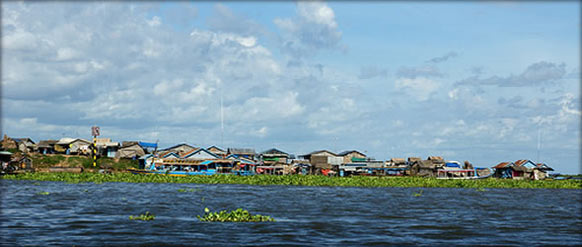
Siem Reap not only have one world-famous archaeological sites, but also has one of the largest and most colorful lakes in Southeast Asia. UNESCO has set the Tonle Sap as a biosphere nature reserves, wildlife sanctuaries into the water and habitat for several rare birds to be the only river in the world that the water flow changed two times a year.


Contemporary Art

Art in Siem Reap is in progress, you can find anything from cheap souvenirs to expensive artwork. Some places are noteworthy art lovers, among others: the McDermott Gallery, where world-class photography will Angkor and surrounding areas exhibited; The Red Gallery, which has the most diverse collection of contemporary art from Cambodia; and The Asia Craft Center, where various kinds of traditional crafts are Cambodia and Southeast Asia.


Colonial Architecture

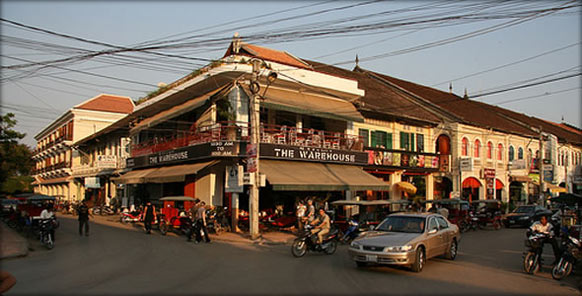
Siem Reap has colonial era buildings, relics of the French who are now converted properly. Located at the intersection and the roundabout quiet, the buildings became hotels, restaurants and the best gallery in Siem Reap, such as Raffles Grand Hotel D'Angkor, the most luxurious hotel in the town that was founded in 1932. The hotel was once visited by a variety of VIP guests, including King Norodom Sihanouk, Charlie Chaplin, the Sultan of Johor and even Jacqueline Kennedy.

source : www.yahoo.com