
Kyoto, Japan Among posters, calendars or pamphlets printed by Japanese travel Agencies, Kyoto gardens became truly The cover face of Japan¦Anyway, You visit these gardens, you can find your own relaxing place in Kyoto, but enjoying evening garden relax in the middle of Kyoto is one Of the most beautiful experience you can get in this city.
Golden Pavilion Temple
Autumn in Kyoto
Stunning Collection of Japan Photos
Geishas
Showing posts with label Japan. Show all posts
Showing posts with label Japan. Show all posts
Kyoto - Japan
Sunday, July 24, 2011


Shrine Shinto
Saturday, March 20, 2010 Shrine Shinto (神社, jinja?) Is a permanent structure built of wood to worship based on Shinto beliefs. Not all the Shinto shrine is a permanent building, a number of temples have rebuilding schedule. Buildings in Ise Jingū example, was rebuilt every 20 years.
In ancient times, although not established buildings, places of worship still called Shinto Shinto shrine. At that time, the dreaded forces of nature such as mountains (volcanoes), waterfalls, rocks, and forests are the object of worship. Shinto shrine shaped like a building now known, is estimated to come from the cult buildings made permanent after that inhabited the We moved from goshintai (object of worship). Shinto Shrine does not have a hall for worship, and not a place to listen to a lecture or propagate religion. In the current era, a Shinto shrine used for traditional Japanese wedding ceremony.
According to the Almanac of Religion (Shūkyō Nenkan) in 1992 published the Cultural Bureau of Japan, Shinto Shrine Association members consist of 79,173-shaped temple religious foundations. This association is also used as shelter 38 religious organizations, religious bodies 9, 20,336 religious instructor, and 82,631,196 adherents of Shinto.
Shinto Shrine originated from the altar (himorogi) which was built for worship while in iwakura (place of worship of nature) or residence of us who made the forbidden human limits, in general shintaisan (the mountain abode of the Us). First permanent building was not there. Origins may be as utaki in Okinawa.
Since ancient times until now, Shinto shrines often do not have honden. There is also the only temple built in front haiden or iwakura mountain / island is forbidden to enter the human (eg: Ōmiwa Temple, Temple Isonokami, Munakata Taisha). Some of the Shinto shrine did not have a building, such as Hiro Shrine in Kumano Nachi Taisha. Having made a permanent building, the day-to-day We always believed in the Shinto shrine. Permanent buildings in a Shinto shrine is also expected as a result of Buddhist influence that always has to keep building statues of Buddha.
Based on an unknown reason, the ancient Shinto adherents in the building adjacent to the already revered goshintai hereditary previously. Buildings Temple Koshikiiwa example, was built adjacent to the iwakura. When it is necessary to build the temple, such as establishing the village, residents chose the sacred place as a place of worship ujigami or bunrei.
Based on the reasons for the establishment of a building, a Shinto shrine is divided into three types: the temple founded on historical reasons (such as in places associated with the birth of a clan, or where figures relating to the purified, for example in Dazaifu Tenmangū), the temple founded in place that have been purified, and the temple erected in a place easily accessible person. Temple Nikkō Futarasan example, at the height of the mountain to the temple should be built branches in accessible locations. The building of the temple can be built anywhere, starting from the middle of the sea, on top of the mountain, to the roof-storey building in the home or in the form of kamidana.
The parts of the temple
Shinto temple complex are easily recognized by a protective forest called Chinju no mori (鎮守 の 森?) All around (except for the temple located in the middle of town). Big tree called goshintai-ki is often marked by Shimenawa. Temple complex (keidai) regarded as sacred area so that at the entrance to the temple was built torii as borderline between the sacred temple complex and the profane. The entrance to the temple complex is called Sando.
On the inside of the temple complex adjacent to the entrance, was built chōzuya (where water flows). People who visit the temple to purify the water using his hands and mouth. Office manager of the temple and the sales counter and ema omamori in easily visible places visitors. In a large temple complex was also built ponds often (shinchi) and bridges (shinkyō).
The building of the temple consists of honden (part of which is adjacent to the altar) and haiden (the outside). People who come to pray outside in the front haiden. Object of worship called goshintai, located in the deepest part of the so-called honden. Honden surrounding areas are generally surrounded by a fence (tamagaki) made of wood or stone.
The room that was between haiden called honden and Heiden (the offerings). [4] In the read norito Heiden (prayer), and placed heihaku (币帛?, Offering to us) in the form of cloth, clothing, weapons, Miki (sake) , and food offerings (Shinsen).
Inside the temple complex (keidai) there are secondary temples called sessha. In the secondary temples are praised by us relating to the Our main object of worship. Secondary Temple was also established for the local We have long occupied the land before the location of the main temple was built. If there are other We then built a temple called secondary massha. Another term to refer to massha is sessha and setsumatsusha.
Shugo shinbutsu after the start of the Nara period, Buddhist temples, called jingū-ji was established in the Shinto temple complex. Monk was hired to conduct the kuyō for Us. [5] Another name for the jingū-ji-ji bettō (别 当 寺?) Or miyadera (宫 寺?) (Guji). Since the days of Nara, a Buddhist temple in the complex is also a Shinto shrine. Union practices of Buddhism and Shinto in Japan ended after the government issued orders Meiji era separation of Buddhism and Shinto (shinbutsu hanzen-rei). After Buddhist temples and Shinto shrines were no longer in a complex, gojūnotō and butsudō (the hall where the Buddha statue placed) in a Shinto temple complex part dismantled. Monk distinguished from Shinto priest (kanzukasa or shinkan).
List of buildings and objects commonly found in Shinto shrines:
* Torii
* Sando
* Toro (stone lanterns)
* Komainu
* Teuzuya (chōzuya, temizuya)
* Haiden
* Heiden
* Saisen
* Honden
* Kaguraden
* Maidono
* Emaden
* Sessha and massha
* Rōmon (楼门?, Gates)
* Shamusho (社 务 所, office manager?).
source : www.wikipedia.org
Sakura, the Japanese national flower
 Sakura (桜, 樱?) Along with chrysanthemums, the Japanese national flower that blooms in spring, which is about the beginning of April until the end of April.
 Sakura can be seen everywhere in Japan, shown in a wide range of consumer goods, including kimono, stationery, and kitchen equipment. For the Japanese, the cherry is an important symbol, which is often associated with women, life, death, and also a symbol for human bond mengeksperesikan, courage, sadness, and joy. Sakura is also a metaphor for characteristics that are not eternal life.
Cherry tree is one of the trees belonging to the family Rosaceae, genus Prunus is similar to a plum tree, peach, or apricot, but generally fall within Subgenus sakura sakura. The origins of the word "sakura" is the word "pocket" (Japanese for "flower") plus the suffix which states the plural "ra". In English, called cherry blossoms cherry blossoms.
Flower color depending on the species, there is white with a little pink, yellow, pink, light green or red light.
Flower classified into 3 types based on the composition of the leaf crown:
* A single flower with a layer of petals
* Double flowers with layered petals
* Semi-double flowers
Flowering cherry trees once a year, on the island of Honshu, cherry flower buds begin to appear someiyoshino species in late winter and flowers bloom in late March to early April when the weather began to warm.
In Japan, the flowering cherry species from Okinawa someiyoshino begins in February, resumed on the island of Honshu to the west, arrived at Tokyo, Osaka, Kyoto at around late March to early April, then move gradually to the north, and ending in Hokkaido in Golden Week holidays.
Every year analysts map out the movement sakura cherry blossoms blooming someiyoshino from west to east and north called sakurazensen. Using known map locations sakurazensen can cherry blossoms in full bloom at a particular moment.
Characteristic
Sakura characteristic is the interest species someiyoshino earlier bloom before the leaves begin to come out. Tens, hundreds, even thousands of trees that are in the same location, the flowers begin to bloom in unison and fall one by one at almost the same time.
Someiyoshino of cherry blossoms can last only approximately 7 to 10 days calculated from the flower buds begin to open until the flowers begin to fall. Cherry blossoms collapse depends on weather conditions and is often precipitated by heavy rains and strong winds. Some birds are known to eat the flowers that taste sweet, whereas pigeons eat all the flowers.
Rare opportunity rollicking picnic under the cherry trees to enjoy the flowering of cherry blossoms is called hanami (ohanami). We do hanami is when all the cherry trees in a place all the flowers are blooming.
In Japan there are standards to inform the cherry blossoms bloom, starting from the opening of flower buds (kaika), 10% of the flowering buds in the tree (ichibuzaki) until the flowers bloom all (mankai). Flowers falling out soon replaced by young leaves. Cherry tree that flowers begin to fall out and begin to grow new leaves as much as 10% called ichibu hazakura. Meanwhile, the cherry trees are all the flowers had fallen out and only have the young leaves is called hazakura (cherry leaf).
Flowers of the tree species yamazakura slower than blossom type someiyoshino and flowers bloomed as his young leaves.
Fuji Mount
 Mount Fuji (富士山, Fuji-san, IPA: [ɸɯʥisaɴ]) is the highest mountain in Japan, located on the border of Shizuoka and Yamanashi Prefecture, west of Tokyo. Mount Fuji is located near the Pacific coast in central Honshu. Fuji is surrounded by three cities of Gotemba (east), Fuji-Yoshida (North) and Fujinomiya (southwest). 3776 m high mountain is also surrounded by five lakes namely Kawaguchi, Yamanaka, Sai, Motosu and Shoji.
Mount Fuji is a symbol of Japan's famous and often depicted in art and photographs, as well as visited by mountain climbers and tourists.
Mount Fuji is estimated to form about 10,000 years ago. An active volcano is still active despite having a low possibility of the eruption, Fuji last erupted in 1707. There are five lakes around Fuji, the Lake Kawaguchi, Lake Yamanaka, Lake Sai, Lake Shoji and Lake Motosu.
Around 200,000 people climb Mount Fuji every year, 30% of them foreigners. Deadline of the most popular time for the climbers is from July 1 until August 27. The climb may take from 3 to 7 hours while the decline of the mountain at around 2 to 5 hours.
Red Real Ships
 Red seal ships (朱 印 船, Shuinsen '?) Was an armed merchant sailing ship that sailed in the Japanese trade to the ports of Southeast Asia, with a red sealed permits issued in the early Tokugawa shogunate, in the first half of the 17th century. Between 1600 and 1635, more than 350 Japanese ships to sail overseas trade under this permit system.
source : www.wikipedia.org
Japanese History
 Japan called Nippon or Nihon in Japanese. Both these words were written with the same kanji, ie 日本 (literally: the genesis of the sun). Nippon term is often used in official business, including the name of the country in the Japanese currency, stamps, and international sporting events. Meanwhile, the term is used in business Nihon unofficially as everyday conversation.
 Nippon and Nihon word means "the state / country sunrise". This name is mentioned in correspondence with the Imperial Japanese Sui Dynasty in China, and Japan refer to the location in the east of mainland China. Before Japan had relations with China, the country was known as Yamato (大 和). [12] In China at the time of the Three Kingdoms, called for Japan is a country Wa (倭).
In the Shanghai dialect of Chinese which is one of Wu dialects, Chinese characters read as Zeppen 日本 ([zəʔpən]). In the Wu dialect, literacy unofficially 日 read as [niʔ] while officially read as [zəʔ]. In some Southern Wu dialect, 日本 read as [niʔpən] is similar to the name in Japanese.
Japanese words in the Indonesian language probably originated from the Chinese language, Chinese language exactly the Wu dialect. Bahasa Melayu ancient country is also referred as the Japanese (but the spelling of Bahasa Malaysia is now: Jepun). The Japanese word in the language of Malays is then brought to the Western World by Portuguese traders, who know this name when he was in Malacca in the 16th century. They who first introduced the Melayu language name to Europe. The oldest document in English which calls on Japan was a letter from the year 1565, in which marked Giapan said.
Source : www.wikipedia.org
Japan
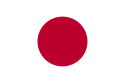 Japan (Japanese: 日本, Nippon / Nihon, the official name: Nipponkoku / Nihonkoku listen) is an island nation in East Asia. Located at the western end of the Pacific Ocean, east of the Sea of Japan, and neighboring China, Korea, and Russia. The islands in the northern Sea of Okhotsk, and the most southern region of the small islands in the East China Sea, specifically in the south of Okinawa neighboring Taiwan.
 Japan consists of 6852 islands which is an archipelago made. The main islands from north to south are Hokkaido, Honshu (the largest island), Shikoku, and Kyushu. Approximately 97% of the Japanese mainland in the fourth largest island. Most of the islands in the Japanese mountains, and some of which are volcanoes. Japan's highest mountain is Mount Fuji which is a volcano. Japan's population amounted to 128 million people, and is ranked the 10th most populous country in the world. Tokyo is the de facto capital of Japan, and status as a prefecture. Greater Tokyo is the name for Tokyo and several cities in the surrounding prefectures. As the largest metropolitan areas in the world, Greater Tokyo has a population of more than 30 million people.
According to traditional mythology, Japan was founded by Emperor Jimmu in the 7th century BC. Emperor Jimmu launch Japanese monarchy chain unbroken until now. Even so, throughout history, for most of the real power in the hands of the members of the court, the shogun, the military, and entered the modern era, in the hands of the prime minister. According to the Japanese Constitution of 1947, Japan is a constitutional monarchy under the leadership of the Emperor of Japan and the Japanese Parliament.
For developed countries in the economic field, Japan has the largest gross domestic product second only to the United States, and entered in the order of three major shopping in balance ability. Japan is a member of the United Nations, the G8, OECD, and APEC. Japan has an adequate military force with modern defense systems such as Aegis and Suat large fleet of destroyers. In overseas trade, Japan is ranked the 4th largest exporting country and ranked the 6th largest importing country in the world. In developed countries, Japan's population has a high standard of living (ranked 8th in the Human Development Index) and the highest life expectancy in the world according to UN estimates. In the field of technology, Japan is a developed country in the field of telecommunications, machinery, and robotics.
Subscribe to:
Posts (Atom)


